

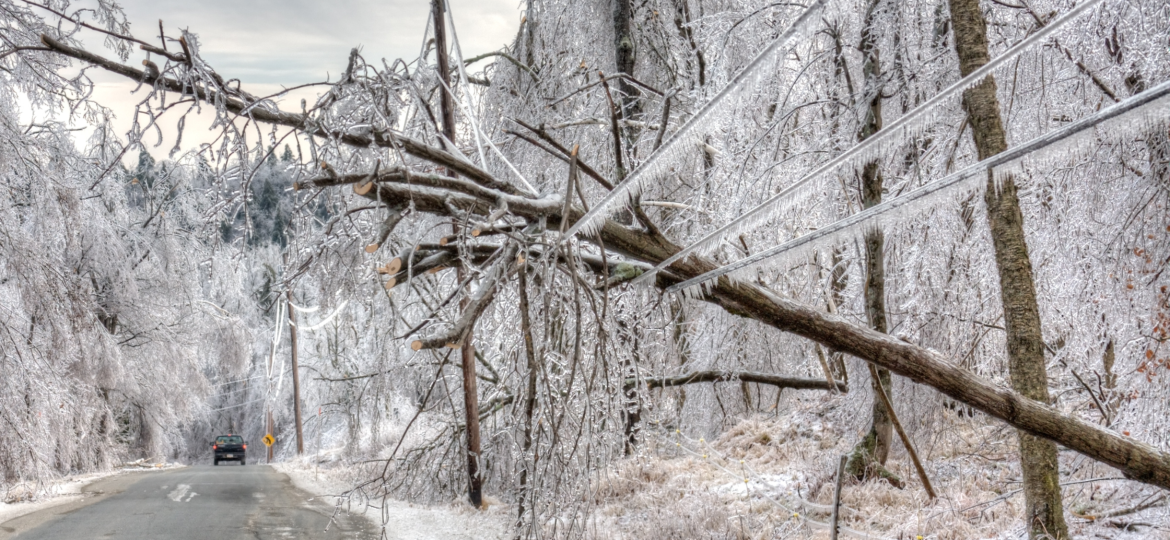
Winter storms present a different kind of risk profile for utilities than high-wind or summer weather events. Snow accumulation, ice loading, freeze-thaw cycles, and limited site access combine to create conditions where damage is often distributed, delayed, and partially hidden.
As crews focus on restoring service and maintaining safety during active storm conditions, full verification frequently happens days or weeks later — once access improves and snow cover recedes.
Why Winter Storms Create Hidden Infrastructure Risk
Unlike single-impact events, winter storms stress infrastructure over time. Ice accumulation adds weight. Freeze-thaw cycles loosen hardware. Snow cover obscures visibility exactly when inspection matters most.
Common post-storm issues include:
- Ice-related conductor sag and hardware fatigue
- Pole and cross-arm stress not visible from ground level
- Substation fencing, debris intrusion, and snow-drift interference
- Access road erosion, washouts, or blocked rights-of-way
- Temporary repairs made under pressure that need follow-up validation
These conditions don’t always trigger immediate alarms — but they often become failure points later in the season.
The Limits of Manual-Only Winter Inspections
After winter storms, utilities typically rely on:
- Ground patrols once roads reopen
- Bucket trucks and climbing crews
- Targeted inspections based on known outages
While essential, these methods can:
- Increase crew exposure to icy or unstable conditions
- Limit inspection coverage due to access constraints
- Delay full portfolio visibility
- Leave documentation gaps for insurers and regulators
Speed matters — but coverage and accuracy matter just as much.
How Drone Inspections Support Post-Storm Verification
Professional drone inspections provide utilities with a safer way to regain visibility once conditions allow.
With aerial data capture, teams can:
- Inspect overhead assets without climbing or road access
- Identify anomalies obscured from ground view
- Compare post-storm conditions against historical baselines
- Create time-stamped, objective records for compliance and insurance
In winter-prone regions, drone inspections add a critical verification layer between emergency response and long-term reliability.
What Mile High Drones Delivers Post-Storm
Mile High Drones supports utilities with safety-first, compliance-ready inspections designed for real-world winter conditions.
Deliverables include:
- High-resolution visual imagery
- Thermal data where applicable
- Asset-level condition summaries
- Portfolio-wide reporting
Audit- and insurance-ready documentation
Winter Storms Don’t End When the Snow Stops
Often, the most expensive winter damage doesn’t appear until temperatures rise, loads shift, or systems return to normal operation.
Utilities that document early, verify thoroughly, and reduce uncertainty after storms are better positioned to prevent secondary failures and unplanned outages.
If your team is reassessing infrastructure after this winter storm, Mile High Drones supports responsible aerial inspections across Colorado and nationwide — helping utilities confirm what’s truly intact once the storm has passed.