

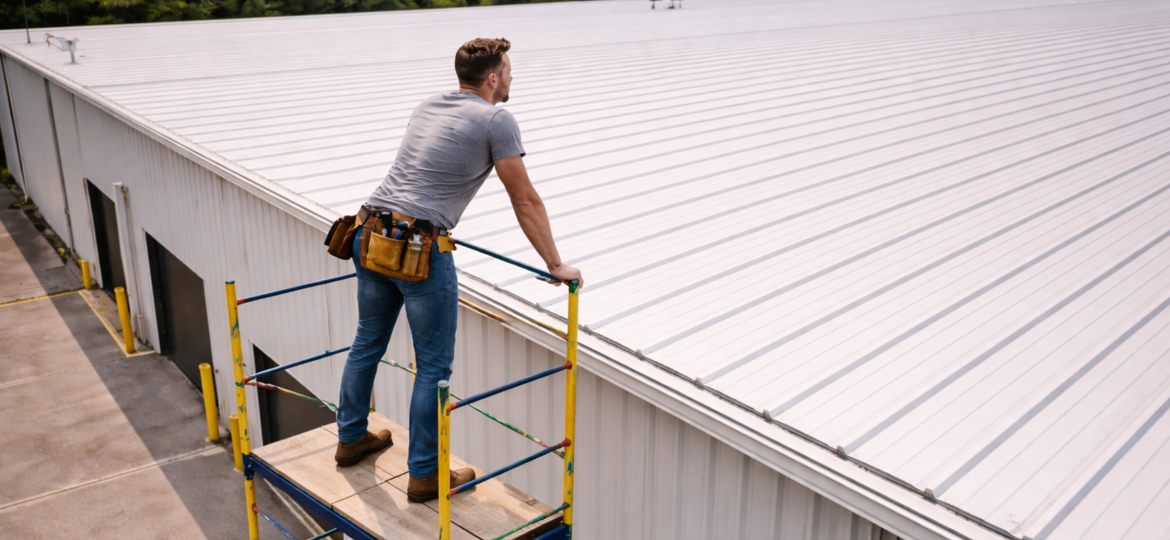
Inspecting commercial roofs is necessary.
Putting people at risk to do it isn’t.
Warehouses, distribution centers, office buildings, and industrial facilities all depend on roofing systems that perform reliably. Small leaks or trapped moisture can quietly evolve into structural damage, mold growth, operational downtime, and expensive repairs.
At the same time, roof work remains one of the most hazardous activities in construction.
Today, teams can inspect 100% of a roof safely, quickly, and accurately without stepping onto the surface.
Drone-based inspections make that possible.
Roofing remains one of the most dangerous trades
Working at height continues to be a leading cause of serious injury in construction.
According to OSHA, roofing has one of the highest fatal injury rates of any construction trade, with falls cited as the primary cause.
Every manual inspection means walking on wet, fragile, or unstable surfaces. That increases exposure, liability, and unnecessary risk.
What visual inspections often miss
Many roof issues begin below the surface.
A roof can appear intact while moisture is already trapped inside the insulation or structural layers. By the time stains or interior leaks appear, the damage is often extensive.
Common hidden problems include:
• early-stage leaks
• saturated insulation
• failing seams and flashing
• drainage issues
• material degradation
Waiting for visible symptoms typically means higher repair costs.
The limitations of traditional roof inspections
Manual inspections usually depend on:
• physical rooftop access
• walking large areas
• selective sampling
• subjective notes and photos
This approach creates three challenges:
• Incomplete coverage
• Slower timelines
• Higher safety exposure
For property portfolios or large commercial facilities, inspections can take days or weeks, delaying maintenance decisions.
How drone inspections improve safety and efficiency
Professional drone inspections remove the need for initial rooftop access.
High-resolution aerial imagery captures the entire roof in minutes, delivering consistent, repeatable, and objective documentation.
This allows teams to:
• inspect 100% of the surface area
• reduce fall risk
• accelerate assessments
• document conditions with defensible data
• prioritize repairs based on evidence
Inspections shift from reactive to preventive.
Thermal imaging reveals moisture you cannot see
Visual imagery shows surface conditions. Thermal sensors go deeper.
Infrared inspections detect temperature differences caused by trapped moisture beneath roofing materials. These hidden wet areas retain heat differently, making them identifiable from the air.
Thermal inspections help teams:
• locate leaks earlier
• avoid destructive testing
• minimize unnecessary replacements
• plan targeted repairs
More precision means less waste and lower costs.
Practical benefits for roofing and infrastructure teams
For roofing contractors
Clear data supports proposals and helps close projects with confidence.
For property managers
Objective documentation supports insurance claims, audits, and maintenance planning.
For facility teams
Inspections are faster, safer, and less disruptive.
Drones don’t replace skilled crews. They provide the information needed before crews mobilize.
How Mile High Drones supports roof inspection
Mile High Drones provides professional aerial roof inspections for commercial properties, utilities, and large infrastructure assets.
We deliver:
• high-resolution visual inspections
• thermal imaging for moisture detection
• georeferenced, asset-level reporting
• defensible documentation for insurance and compliance
• fast, safety-first deployments
The goal isn’t more data.
It’s clarity, verification, and confident decision-making.
Teams shouldn’t have to climb a roof just to find out what’s wrong.
Drone roof inspections reduce risk, speed up diagnostics, and deliver reliable information before repairs begin.
If you’re looking for a safer and more efficient way to assess commercial roofs, Mile High Drones is ready to help.